
- Transfer Files From Bootcamp To Mac
- Access Mac Os Drive From Windows Bootcamp Mac
- Access Mac Os Drive From Windows Bootcamp Windows 10
- Mac Drives On Windows
- Access Mac From Windows 10
- Bootcamp Windows Read Mac Partition
By default, your Windows PC can’t access the drives that are formatted in the Mac file system. It’s easier for your PC to read NTFS (Windows file system) and FAT32/exFAT, however, the Windows 10 can’t actually read drives formatted in other file systems that are likely coming from Mac (HFS+) or Linux (ext4).
If you have access to Windows only I'd suggest you to try these steps: 1) Access the run command via Win + R (I don't know how Bootcamp actually remaps Win key, alternatively just open start menu and type run). 2) Insert msconfig once inside the Run GUI. 3) Once accessed the System Configuration Utility click on the Boot tab. Moreover, it can also facilitate data access to both APFS and HFS formatted drives giving you unlimited access to most Mac-formatted drives. Though it is not possible to view files on window file explorer, it comes with a user-friendly where you can’t enter simple commands and get direct access.
The UFS+ is the file system by Apple’s Macintosh and if you are using a Mac-formatted drive on your PC, chances are it’s not readable by Microsoft Windows 10. The macOS Extended (HFS+) is a file system used by Mac and it can only be read by default in Mac systems, unlike Windows. If you are trying to use a drive formatted in Mac on Windows 10, it’s possible. Here’s how.
- Download Boot Camp Windows Drivers. We only need Boot Camp Assistant for its ability to download all of the Windows drivers we’ll need to ensure the install of Windows will run correctly on Mac hardware. We won’t be using Boot Camp Assistant to partition a drive or step us through the install process.
- I have downloaded Windows 10 via Bootcamp a number of times, and I want to do it again. The thing is, that it doesn't seem to allow me that much space. I only have 120gb available on my MacbookPro Early 2015. Previously, when I've downloaded Windows 10 via Bootcamp, it allows me enough space to download a game or two, but thats not the.
- With HFSExplorer you can access all of the files and folders on your macOS partition/drive – from Windows. HFSExplorer is a completely free and open source app. PLEASE NOTE: the steps and screenshots used in this guide are from Windows Vista. I have confirmed that HFSExplorer works in the latest versions of Windows (Windows 7, 8 and 10).
How To Read Mac’s UFS Drive On Windows 10
To read drives formatted in Mac on your Windows 10 PC, here’s what you need to do, just follow these simple steps.
- Get this free tool called HFSExplorer for Windows.
- Install and launch the program, you will need Java to use this software. It will prompt you if your system doesn’t have Java installed, if you already have, it will run normally.
- Connect your Mac-formatted drive on your Windows PC and select ‘Load file system from the device’ from File in the menu bar. Click Load.
- You will see the contents of the HFS+ drive in the app window. Choose the files or folders you want to copy, click Extract to copy and save to a specified folder, the files or folders will be copied to the location you choose on your PC.
Don’t expect any fancy UI or any system integration that allows you to access the drive from the Windows Explorer just like you usually do for other drives. This tool is good if you need to get a few files out of the drive, not recommended if you are looking for a chunk of files to extract out of it, the process might be a tad difficult and time-consuming.
Also, the HFSExplorer doesn’t support write access to the drive, if you want to copy anything in the drive, it’s not possible with this tool. Use it if you want to copy the data from the drive. Check on the alternative if you want the read and write access with better integration.
Better Alternative?
An alternative to it is the Paragon HFS+ software that seamlessly integrates into the Windows such that you will be using the drive as you normally do with other drives supported by Windows. Plugging in the drive, and you will see a device connected and shown in the explorer along with your internal drive.
- Get the software Paragon HFS+ for Windows and install it as you would do for other Windows programs.
- That’s it, restart the PC and connect the drive.
- You will be able to see the drive in the explorer which can be accessed by the keyboard shortcut Windows logo key + E or double click on This PC on desktop.
The only downside is that this software is not free, you will spend about $19.95 for it, however, the good part is it offers a 10-day free trial to give it a try. You can either save the money if you are just copying the data or get the write access with system-wide integration for a mere cost.
In the end, it’s now possible to use the Mac drive on Windows, although not in a straightforward way, you may end up using the apps for file transfers or unlikely buying out softwares. It is recommended to format the drive in the exFAT system to get things easier, this helps if you are using the drive frequently on both the systems.
More Mac stuff can be found here – Mac tutorials, guides, tips, tricks, and hidden features. To get updates on the latest tech news, smartphones, and gadgets, follow us on our social media profiles.
Instagram | Facebook | Twitter | Youtube | TikTok
If you dual-boot your Hackintosh, you've probably noticed that Windows can't read hard drive partitions used by Mac OS X. Mac OS X uses the HFS+ hard drive format, which Windows doesn't support. Luckily, you can enable HFS+ support on Windows with the help of one or two Windows drivers (depending on your budget). Read past the break for a tutorial on how to access your Hackintosh's Mac OS X hard drive partition from Windows.Having read/write access for your Mac partition on Windows will come in handy if your Hackintosh becomes unbootable, because you'll be able to boot into Windows to recover your files (and possibly fix your Hackintosh's boot problem). On top of that, it's simply convenient.
 LATEST UPDATE (January 26, 2013): Added Apple's Boot Camp Drivers to the article.
Paragon HFS+ ($20)
Paragon HFS+ ($20) is a Windows application that mounts all of your Mac hard drives in Windows Explorer (a.k.a. My Computer) and gives you read and write access. There's a 10-day trial available. Paragon HFS+ runs in the background and automatically starts on bootup, so accessing your Mac drives will feel exactly like accessing normal Windows drives.
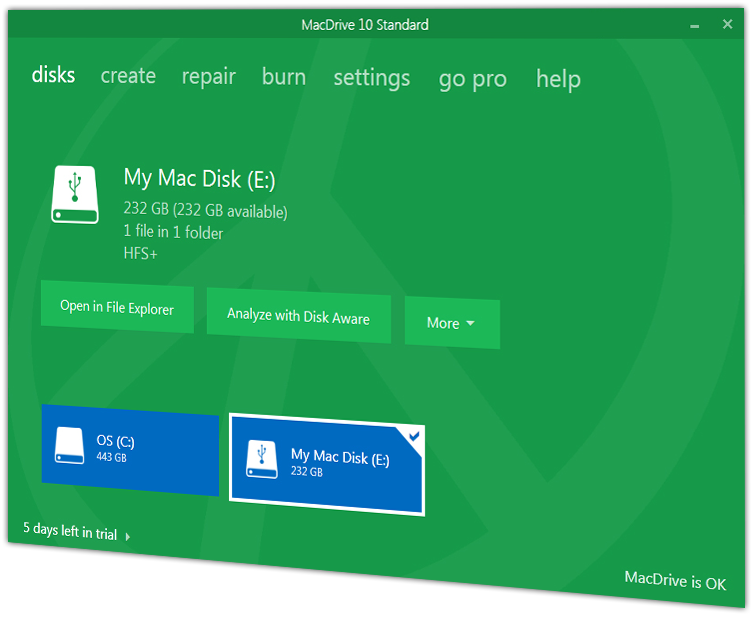
Paragon is the same company that makes NTFS+ for Mac OS X, my recommended solution for enabling NTFS write support on Mac OS X Lion. If you're looking for an alternative to Paragon HFS+, then you can also consider MacDrive ($50; 5-day trial), which is the solution that I'm currently using on my own Hackintosh. It has a higher price tag and doesn't offer much more than Paragon HFS+, but it's an option. If purchasing apps is not an option for you, check out the following section.
Apple Boot Camp Drivers (Free)
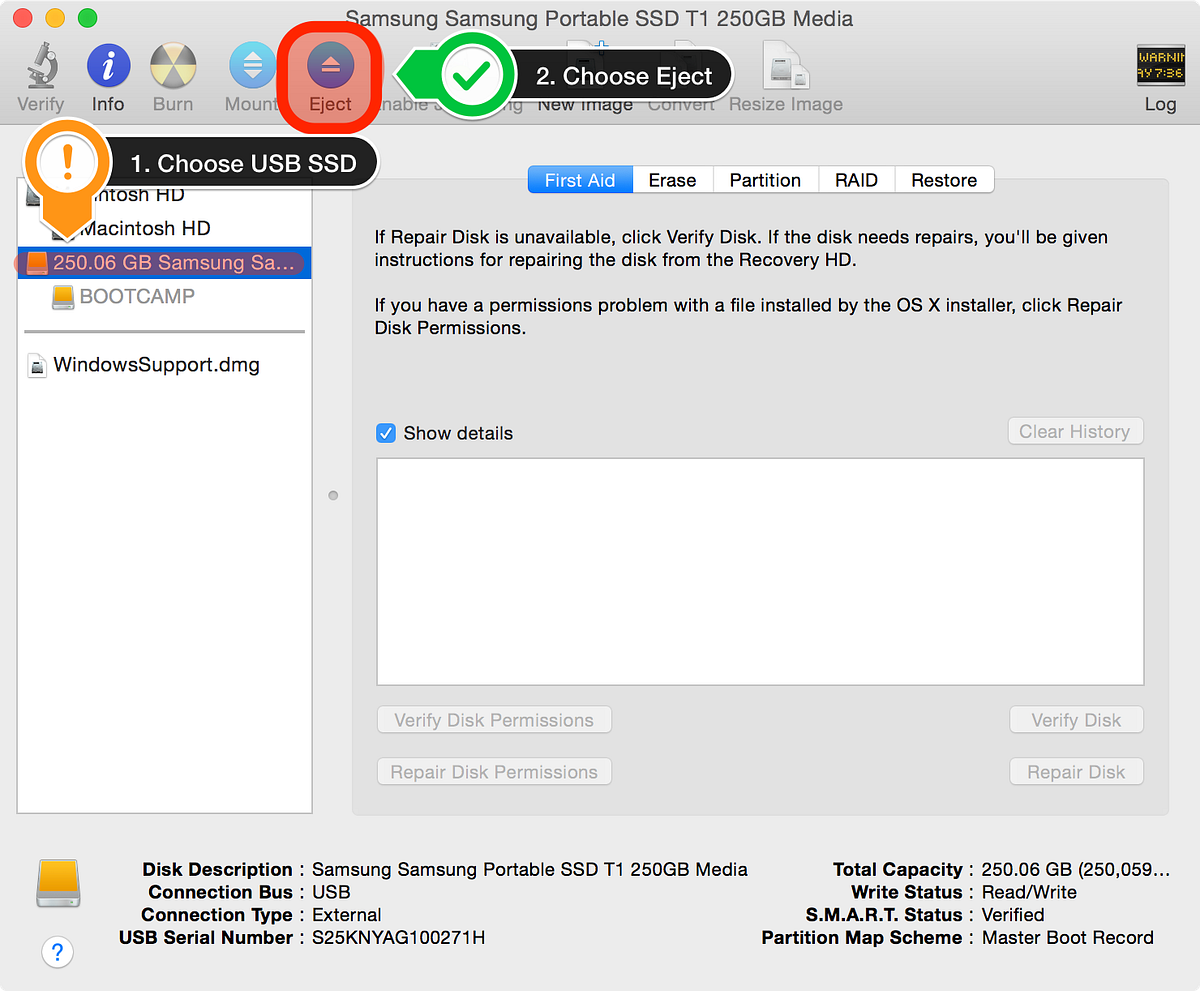
Apple's Boot Camp software is designed to help you run Windows on real Macs. Among other things, Boot Camp includes built-in HFS+ drivers for Windows. These drivers will mount your Mac hard drives in Windows Explorer and give you read access (but no write access). If you don't need to write any files to your Mac hard drives, using them is a free and relatively pain-free solution.
Transfer Files From Bootcamp To Mac
While the HFS+ drivers are normally packaged as part of Apple's Boot Camp Assistant software, you can download them separately below.DOWNLOAD: HFS Driver v.4.0.2.0
Access Mac Os Drive From Windows Bootcamp Mac
The above download is a ZIP file; open the file in Windows by double-clicking it. Once opened, double-click the 'Add_AppleHFS.reg' file. This will add the Boot Camp drivers to your Windows registry.Access Mac Os Drive From Windows Bootcamp Windows 10
Next, open either the 'For 32-bit Windows' or 'For 64-bit Windows' folder, depending on your copy of Windows. (To find out whether your copy of Windows is 32-bit or 64-bit, click on the Start Menu, and then right-click on 'My Computer' and go to 'Properties'.) Inside these folders are two device driver files. Copy these two files to C:WindowsSystem32driversMac Drives On Windows
. This will install the actual drivers into Windows; reboot your computer afterwards. Once Windows has restarted, your Mac hard drives will be mounted, and you will be able to read files from them properly.NOTES:
- This method has only been confirmed to work with Windows 7 and Windows 8.
- You must uninstall Paragon HFS+ or MacDrive from your computer before installing Apple's HFS+ drivers.
- To uninstall Apple's HFS+ drivers, delete the two driver files from C:WindowsSystem32drivers. Restart your computer. Then, double-click on the 'Remove_AppleHFS.reg' file to remove the drivers from your Windows registry.
Access Mac From Windows 10
SOURCE: Apple HFS+ Windows Driver (Download) [MacRumors]Bootcamp Windows Read Mac Partition